
applied to rehabilitation
is decisive in achieving goals so people can attain
an appropriate quality of life
and social reintegration.
Custom equipment
development
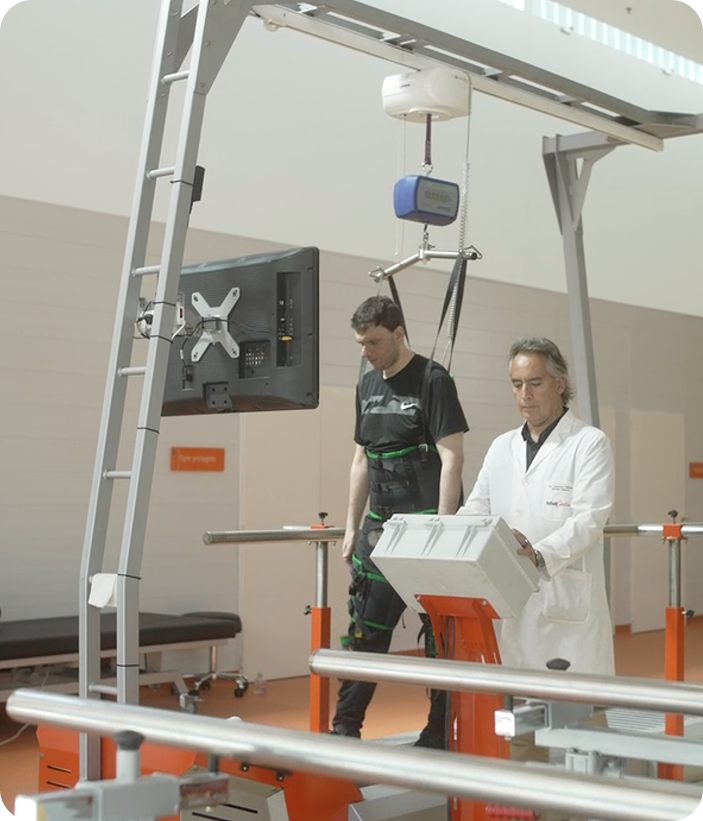
Rehab Center manufactures and develops equipment for its patients (beds, standing frames, wheelchairs, walking aids) through the Life Center team and its agreements with international companies that are leaders in technological innovation, ensuring optimal use and outcomes.
It also supports home adaptations and the removal of accessibility barriers whenever patients require it.
Xcite System
Functional training for upper and lower limbs.
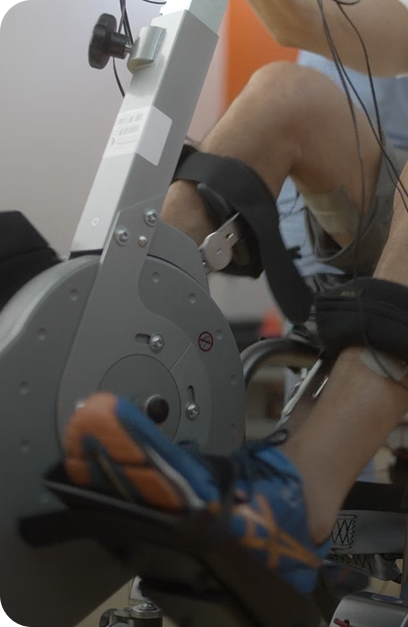
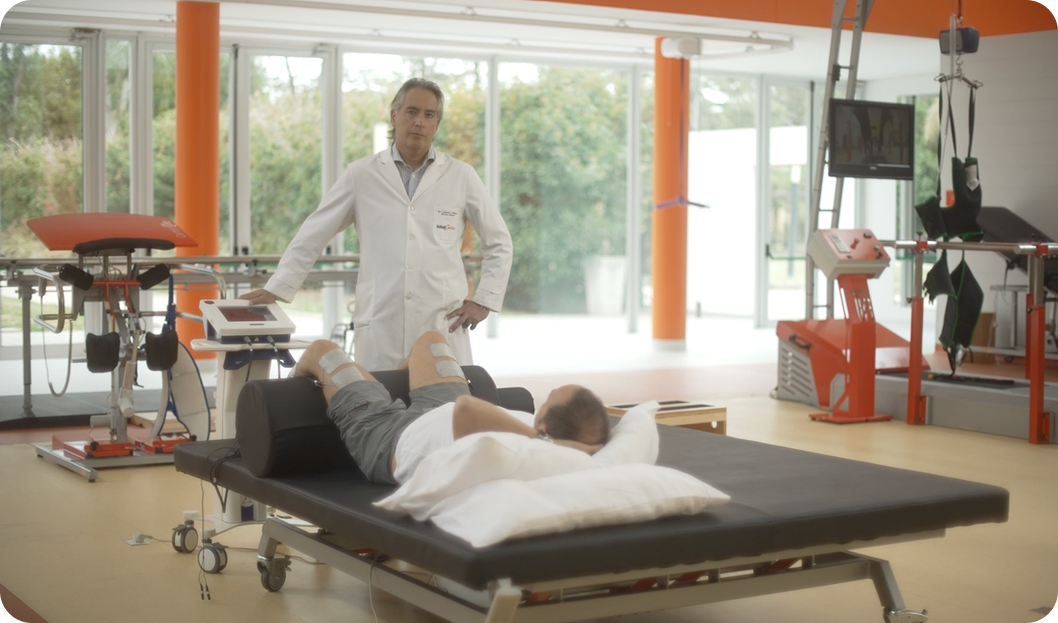
A one-of-a-kind device in the global market, ideal for treating disuse muscle atrophy in long-term neurological patients through faradic current electrical stimulation, coordinated by a computerized system designed to generate programmed sequences of coordinated movements.
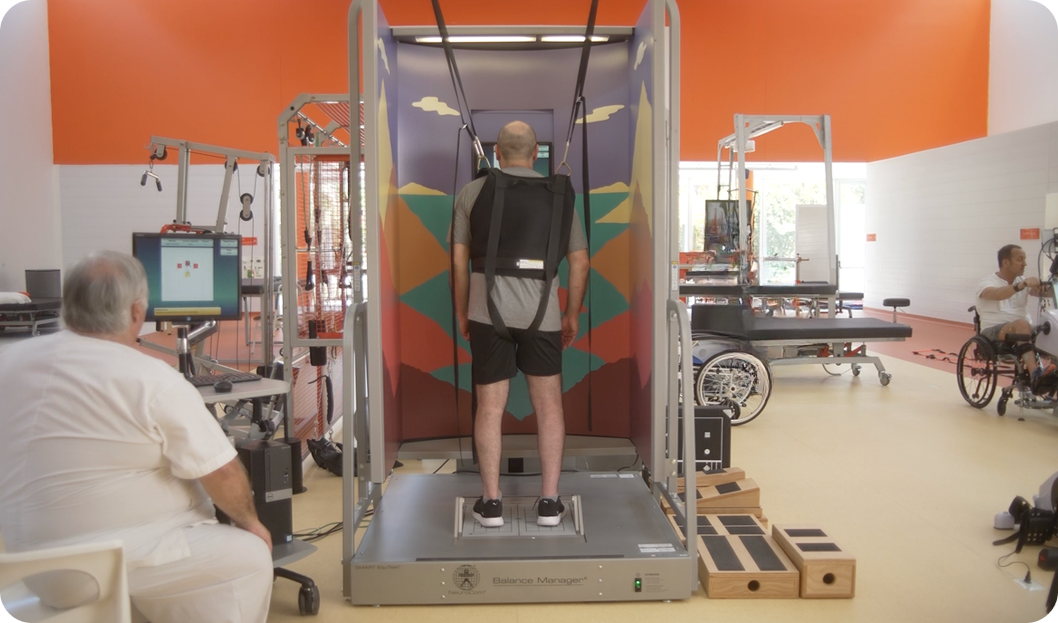
Smart EquiTest
Used for balance assessment with dynamic computerized posturography
The platform can quantify the position of the center of gravity, postural control, and the patient’s visual environment to help maintain balance.
RT 300 System
Safe, motor-assisted physical training
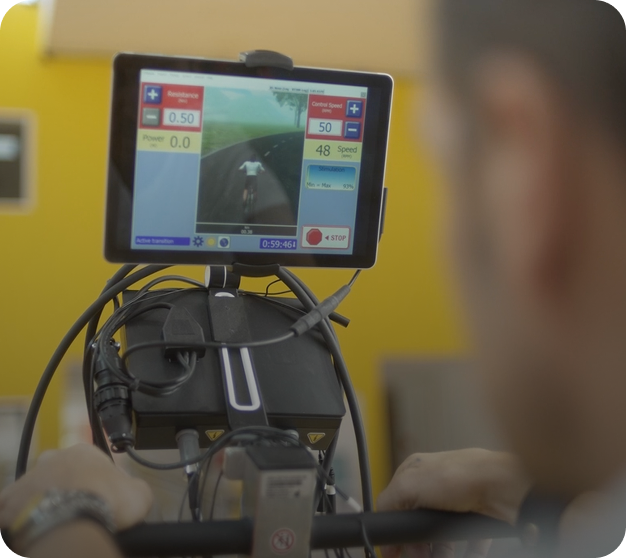
A stationary bicycle with an integrated electrical stimulation unit that combines assistance, electrical stimulation, and, when needed, resistance to the exercise performed by the patient.
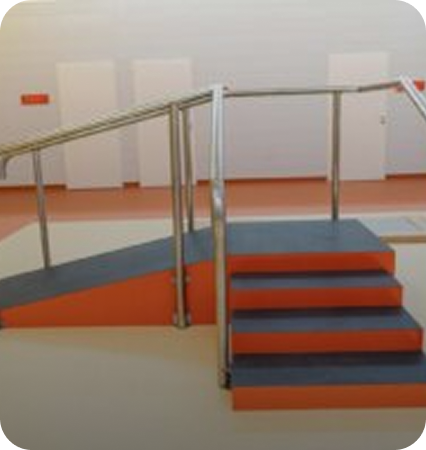
Training
ramp
Enables practice in
navigating architectural
barriers.
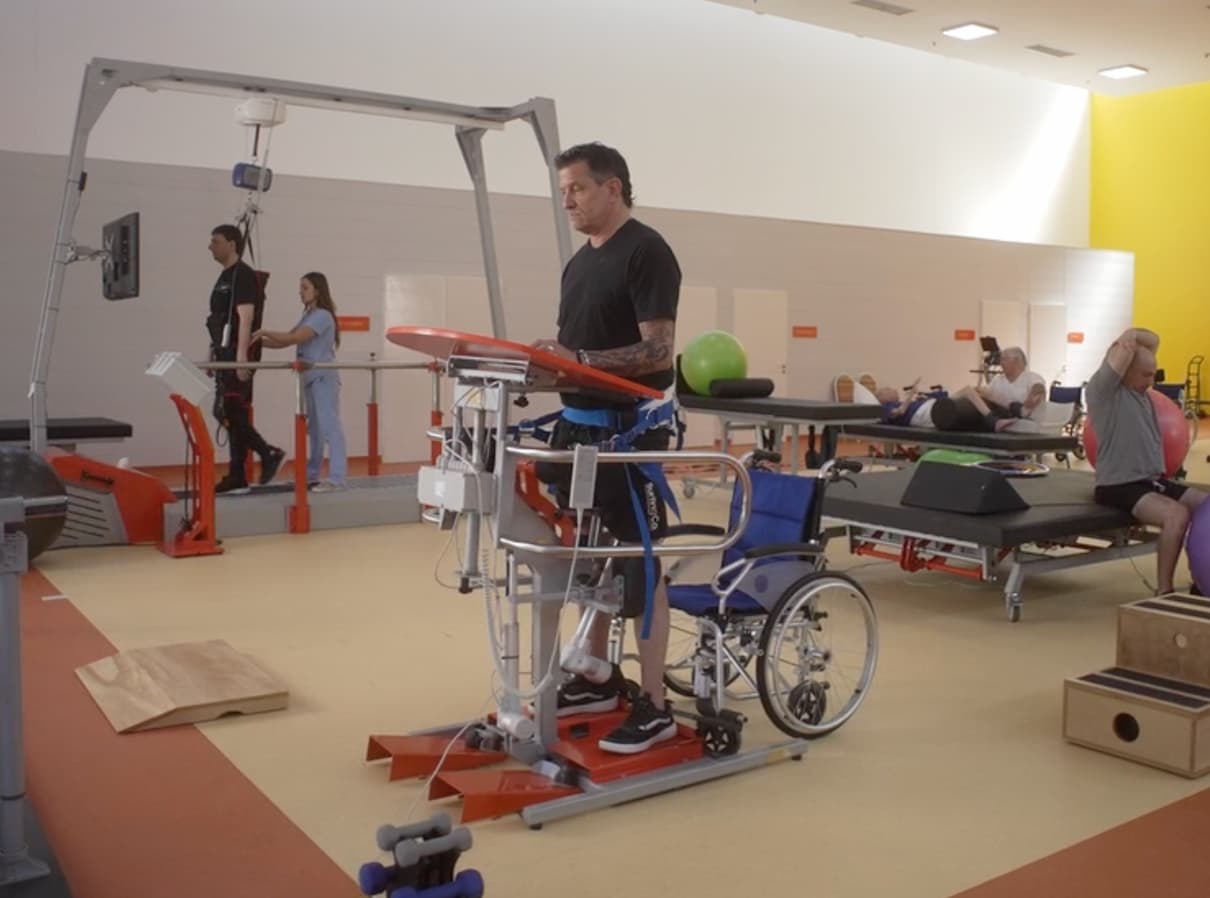
Servo-assisted
standing frame
Helps achieve standing.
Maintaining this position
is accomplished through
repetition of the exercise,
building autonomic training
and reducing the risk of
orthostatic hypotension.
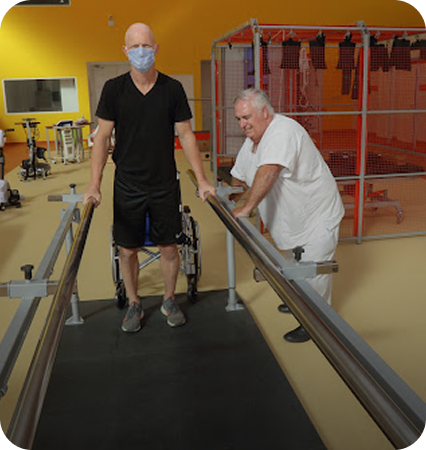
Parallel
bars
Despite their long history
in rehabilitation—dating
back to Roman times—their
continued use remains
essential for gait re-education
in patients.
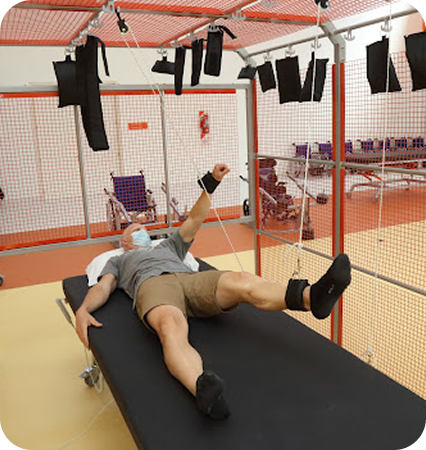
Therapy
cage
Designed to perform
resisted exercise techniques
using pulleys and weights,
customized to the patient’s
needs in terms of range of
motion, load, and duration
of the exercise.

Urban adaptation
center
A simulation of community spaces and accessibility barriers. It provides a training environment that recreates the experience of moving through a city.

Occupational Therapy
gym
This is where activities of daily living are practiced, aiming to achieve the greatest possible independence for the patient. It features the latest re-education techniques and also includes computer-based technology for patient training.
Protected
gym
A space where the patient works one-on-one with the required therapist. Some patients, due to their neurological condition, cannot—or should not—work in a shared gym with other patients. The best option is focused work in an isolated area with their therapist to prevent distractions and support their rehabilitation goals.